Everything to know about Camel Valley Igatpuri — waterfalls, best season, how to reach, and where to stay nearby.
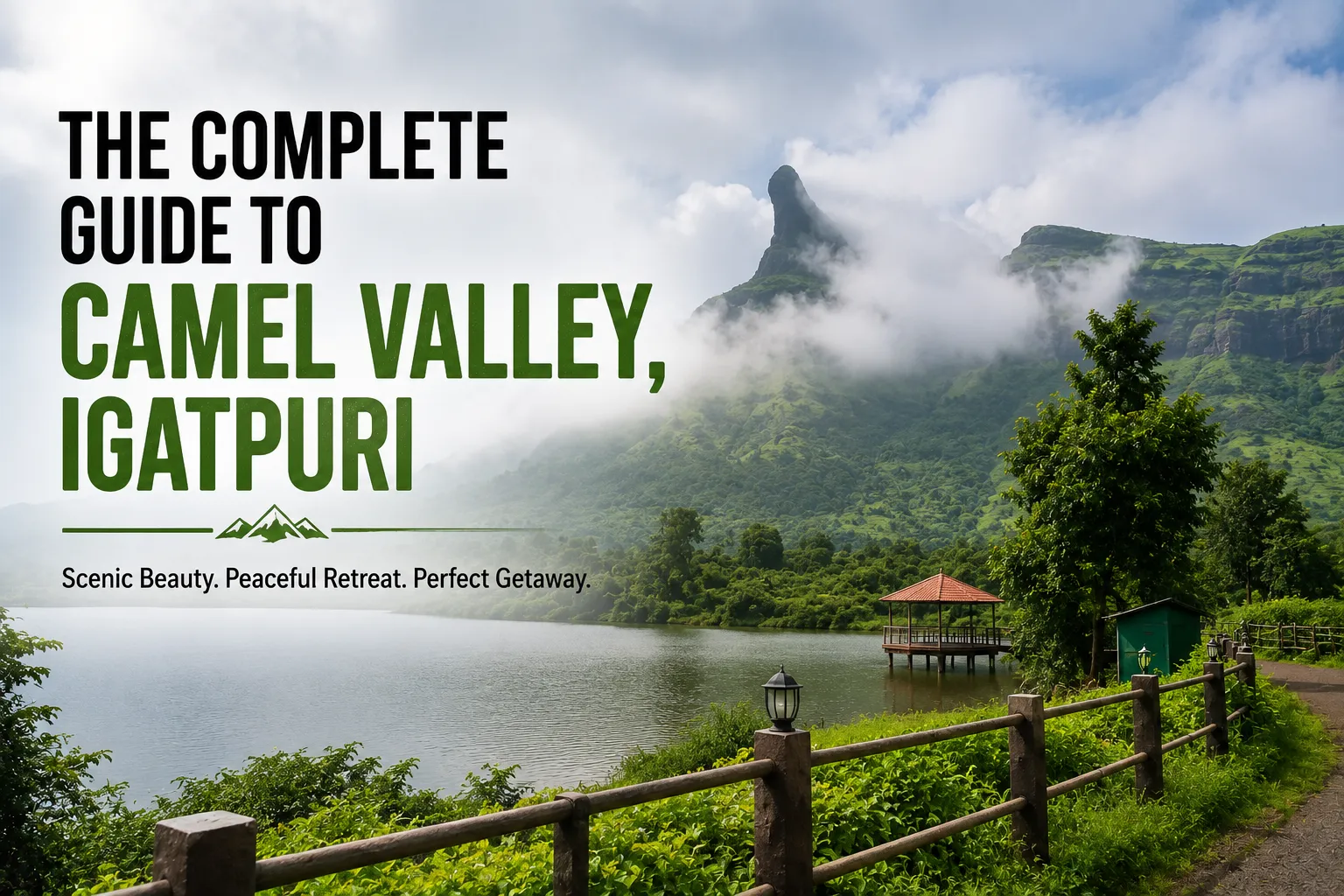
Camel Valley Igatpuri is one of the most photographed viewpoints on the Mumbai-Nashik highway, and for good reason. A short pullout on NH-3 opens onto a wide, cliff-ringed basin named for a rock formation that, from the right angle, really does look like a camel's head and hump. During the monsoon, five separate streams drop into the valley from a single ridge, turning the whole basin into a wall of falling water that's visible even from the railway line below. The rest of the year it's quieter — green, misty in the mornings, and popular with photographers who come just for the light.
This guide covers what the valley actually looks like depending on when you go, how to reach it from Mumbai or Nashik, what else is worth combining it with, and where to base yourself if you're making a weekend of it.
Where Camel Valley Is and How It Got Its Name
Camel Valley sits close to the Bhatsa River Valley, a few kilometres outside Igatpuri town on the Mumbai-Nashik route. The valley takes its name from a large rocky outcrop on one of the surrounding cliffs, shaped enough like a camel — head, neck, and hump — that early visitors started calling the whole basin after it. Locals sometimes point out the formation from the viewpoint; it's easiest to spot in flat, even light rather than harsh midday sun.
The site sits right off the highway, which is part of its appeal. Unlike some of Igatpuri's other viewpoints and forts, Camel Valley doesn't need a trek to reach — you can pull off the road, walk a short distance to the railing, and be looking at the valley within minutes.
The Waterfalls: What Makes This Spot Different
The main draw is the water. During the monsoon, the valley's cliff face carries several separate falls — often described as five distinct streams — cascading down from a shared source point on the ridge above. Depending on rainfall that week, the falls can run anywhere from a scenic trickle to a genuinely thunderous drop of several hundred feet. Maharashtra Tourism describes the site as a monsoon-season landmark, noting that the waterfall can plunge close to a thousand feet when the rains are heavy, filling the valley with mist and sound.
Outside the monsoon months, the falls thin out or disappear, but the valley itself remains worth the stop for the sheer scale of the cliffs and the view down toward the Bhatsa River basin.
What sets Camel Valley apart from other viewpoints in the region is how close the falls sit to the road. Places like Ashoka Falls or Vihigaon Waterfall ask for a walk-in of some kind, however short. Camel Valley doesn't — the drop is visible almost as soon as you step out of the car, which is part of why it draws such a steady stream of highway travellers rather than only dedicated day-trippers. That accessibility comes with a tradeoff worth knowing about: because it sits so close to the road, the viewpoint can get crowded fast on a clear monsoon weekend, and the informal parking along the highway shoulder isn't built to handle a large volume of cars. Arriving early, or timing a visit for a weekday, makes a real difference to how much of the view you get to yourself.
Best Time to Visit Camel Valley Igatpuri
Monsoon (June to September) is the obvious answer if the waterfalls are the point of your visit. This is when Camel Valley looks the way it does in most photographs — green cliffs, low cloud sitting in the basin, and multiple falls running at once. The tradeoff is footing: the viewpoint area has no fencing or safety barrier in most sections, and wet rock combined with monsoon crowds means it's worth keeping a firm grip on kids and staying well back from the edge.
Winter (October to February) trades the waterfalls for comfort. Temperatures in the region typically sit in a pleasant range through these months, the skies are clear, and visibility across the valley is at its best. It's a better window if you're combining the viewpoint with a longer day of sightseeing or a trek, since the trails and roads are dry.
Summer (March to May) is the quietest and least dramatic stretch — the falls are gone and the landscape is drier — but it's also when you'll have the viewpoint mostly to yourself, and early-morning light is still worth the stop if you're passing through anyway.
What to Do at and Around Camel Valley
Photography. This is the main activity, and mornings are the best window before haze builds up over the valley. The mix of layered cliffs, mist, and (in monsoon) multiple waterfalls in one frame is what keeps the spot popular with both casual visitors and serious photographers.
Short walks and viewpoint exploration. The main lookout is easy to reach, but there are a few informal paths along the ridge that open up different angles on the valley and the falls. None of this is a formal trail system, so go carefully, especially on wet rock.
Adventure activities. Some operators in the area run river crossing and light rafting activities tied to the Bhatsa River Valley nearby, mostly seasonal and monsoon-dependent. If this is the plan, it's worth confirming timing and operator credentials in advance rather than showing up and hoping.
Wildlife and birdwatching. The valley's greenery attracts a fair amount of birdlife and the occasional deer sighting along the quieter stretches, particularly in the cooler months when the undergrowth isn't as dense.
Sunrise and sunset visits. Because the viewpoint faces the open valley, both ends of the day change the light dramatically. Sunrise tends to bring soft, even light with a good chance of low cloud sitting in the basin — ideal for photography and generally the quietest window of the day. Sunset brings warmer tones across the cliff faces but also the day's biggest crowds, since it lines up with most day-trippers heading back toward Mumbai or Nashik in the evening.
Getting to Camel Valley Igatpuri
The valley sits directly off the Mumbai-Nashik highway (NH-3), which makes it one of the easier stops in the region — no trekking gear required, no long detour off the main road.
From Mumbai: Camel Valley is roughly two and a half hours by car via NH-3, the same drive that takes you into Igatpuri town. There's no ghat-road stretch on this route, which matters more than it sounds like on a monsoon weekend when hairpin roads elsewhere in the Sahyadris can back up badly.
From Nashik: The drive is shorter, at under an hour, making Camel Valley an easy half-day add-on if you're already exploring the Nashik side of the Western Ghats.
By train: Igatpuri is a stop on the Mumbai-Nashik rail line, and the valley is close enough to the station that a short taxi or auto ride covers the distance. Some travellers note you can even catch a glimpse of the falls from the train itself during monsoon.
The viewpoint is open through daylight hours, roughly 6 AM to 6 PM, and entry is free. There's no formal parking infrastructure, so expect roadside stopping during peak season, and a handful of local stalls selling corn, tea, and snacks near the pullout.
What Else to See Nearby
Camel Valley works well as one stop on a longer Igatpuri day rather than a destination on its own. A few places worth combining it with:
Bhatsa River Valley, right next door, offers its own set of green, layered viewpoints and is often visited in the same trip.
Tringalwadi Fort, a 10th-century hill fort at roughly 3,000 feet, is a moderate trek away and rewards climbers with sweeping views over the Western Ghats — a good pick if you want to add some elevation to the day.
Dhamma Giri, the world's largest Vipassana meditation centre, sits a short drive from the valley and is worth a stop even for non-practitioners, if only to see the Myanmar Gate entrance.
Kalsubai Peak, Maharashtra's highest point, is a longer detour but a natural next stop for anyone treating this as a two-day trip built around trekking.
Bhavali Dam and the misty stretch around Igatpuri Lake round out a fuller day for anyone not in a rush to get back on the highway. Neither needs much time — twenty to thirty minutes each is enough to take in the view — but together with Camel Valley they make for a satisfying loop that doesn't require an early start or a late finish.
None of these stops demand serious planning or specialised gear. The appeal of an Igatpuri day built around Camel Valley is exactly that it doesn't ask much of you logistically — a car, a rough idea of which two or three stops you want to hit, and a willingness to get an early start if photography is the priority.
Where to Stay Near Camel Valley
If Camel Valley is the anchor for your trip, the most practical base is right next to it. Vivaant Retreat & Conventions sits about 1.7 km from the valley, on NH-3 itself, which means no ghat-road driving after a long day out and a short hop back to the viewpoint if you want to catch the light again at sunrise.
The property's Rooms page lays out the options: Valley Deluxe rooms come with balconies and space for up to four guests, a comfortable base for couples or small families building a trip around the valley and Igatpuri's other viewpoints. For larger groups, the Sahyadri Suite adds a second room, two balconies, and a private pantry — useful if you're combining a Camel Valley morning with a longer stay that includes the pool and the property's other Igatpuri experiences.
Both room types are covered on the same rooms page, along with the property's driver accommodation option, worth knowing about if you're travelling by car from Mumbai or Nashik.
Planning a trip built around Camel Valley and Igatpuri's other viewpoints? Check availability at Vivaant Retreat & Conventions →
A Few Practical Notes Before You Go
There's no fencing at most of the viewpoint, so keep a close eye on children and avoid the edge on wet rock.
Monsoon weekends draw crowds; arriving early in the day gets you both better light and a quieter viewpoint.
Carry a light rain layer even outside peak monsoon — the valley's microclimate can turn misty with little warning.
Signal or connectivity along the highway pullout can be patchy, so it's worth downloading offline maps or confirming directions before you leave your stay.
Combine the stop with Bhatsa River Valley or Tringalwadi Fort rather than treating it as a standalone half-day trip; the drive out is short enough to make a fuller loop worthwhile.
Camel Valley Igatpuri isn't a place that needs a lot of planning — it's a short stop, easy to reach, and rewarding almost any time of year. What changes is what you'll see when you get there: a wall of waterfalls in July, or a wide, quiet green basin in December. Either way, it's one of the easiest wins on an Igatpuri itinerary, and one of the closest to home if you're staying at Vivaant Retreat & Conventions.