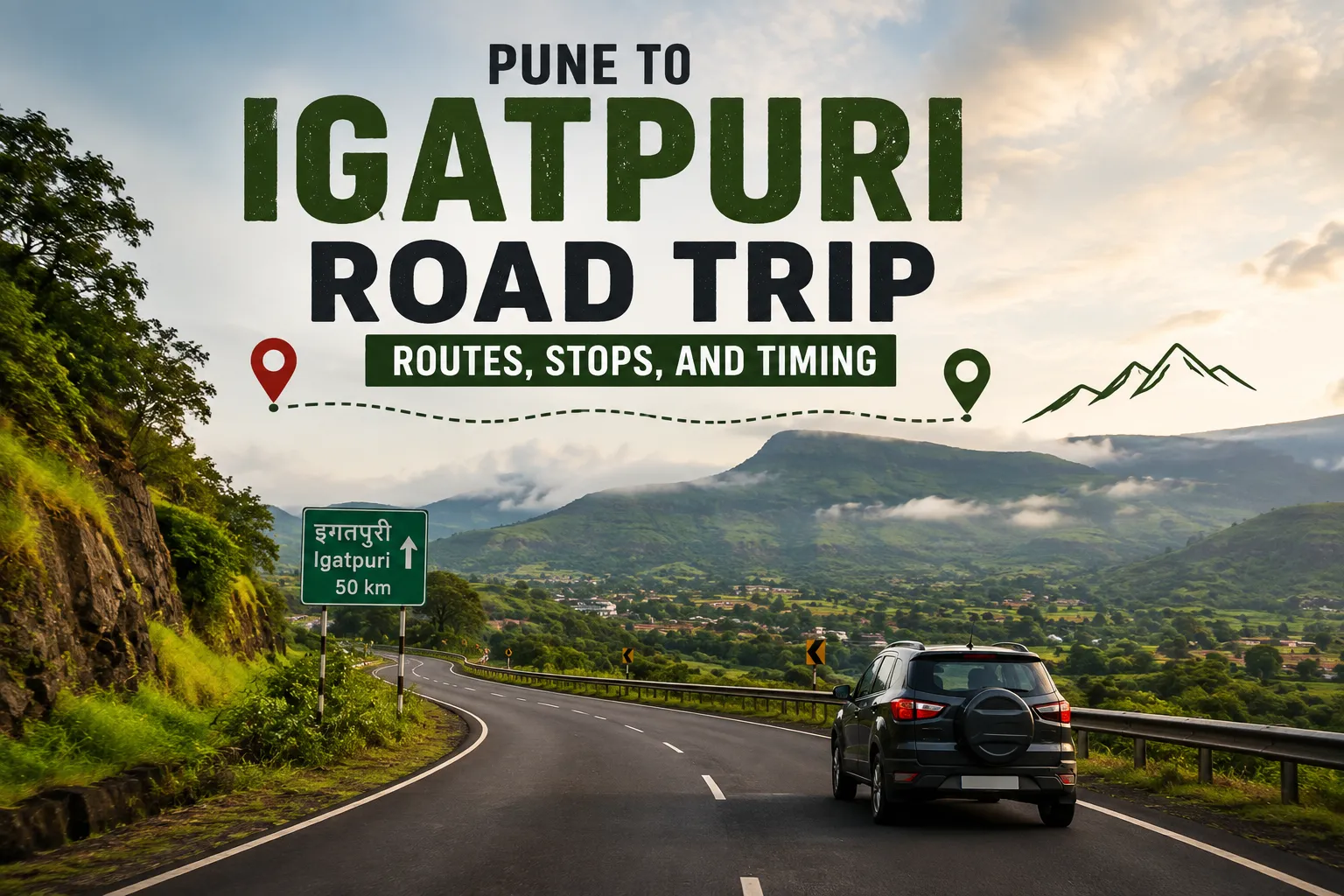
Two routes, two food stops, and a drive that trades city traffic for open countryside — a practical guide to the Pune to Igatpuri road trip.
A weekend escape only really starts once the drive itself stops feeling like a chore, and that's exactly what makes a Pune to Igatpuri road trip worth planning properly rather than treating as an afterthought. Unlike the well-worn Mumbai-side approach to the Sahyadri hills, this route runs through a different stretch of Maharashtra entirely — smaller highway towns, open farmland, and a road that rewards travellers who leave with a plan rather than just a destination punched into a map app.
For guests heading to Vivaant Retreat & Conventions from Pune, the drive covers roughly 240 to 250 kilometres and takes somewhere between four and five hours depending on the route chosen, the time of departure, and how many stops are built in along the way. That's a longer haul than the Mumbai approach, but a Pune to Igatpuri road trip has its own advantages once the route and timing are worked out.
Choosing the Route
There are two practical ways to make a Pune to Igatpuri road trip, and the choice between them usually comes down to timing rather than distance. The more direct option follows NH60 north out of Pune, passing through Chakan, Rajgurunagar, Manchar, Narayangaon, and Sangamner before joining the road toward Ghoti and on to Igatpuri, according to a route breakdown from On The Eve's travel guide. This is the shorter, more commonly used path, running largely along open highway with steady traffic flow outside of peak weekend hours.
The second option swings west toward the Mumbai-Pune Expressway, joins NH48 near Kalyan, and continues north from there toward Igatpuri. It's a longer route on paper, but it can work out faster in practice when NH60 is congested, particularly during long weekends or the peak of monsoon tourism season, when the direct route through Sangamner sees heavier traffic than usual. Travellers making a Pune to Igatpuri road trip during a festival weekend or the height of the rains are often better off building in the extra buffer that the expressway route allows, according to route notes from regional taxi operators covering this corridor, rather than gambling on a shorter route that may end up slower on the day.
NH60 itself is a substantial stretch of highway, connecting Pune to Dhule across nearly 400 kilometres, according to details recorded in the route's Wikipedia entry — it was previously numbered NH3 and NH50 before being consolidated into its current designation, and its northern stretch between Dhule and Nashik forms part of the wider Asian Highway network. None of that history changes the drive itself, but it explains why the road tends to be well-maintained and consistently signed for most of the way, even through the smaller towns this route passes on its way north.
What the Drive Actually Looks Like
The first hour or so out of Pune, through Chakan and Rajgurunagar, tends to be the busiest stretch of a Pune to Igatpuri road trip, since it overlaps with local commuter and industrial traffic around Pune's northern edge. Past Manchar, the road opens up considerably, running through farmland and smaller towns where the pace of traffic eases and the scenery shifts from industrial outskirts to open countryside.
Narayangaon and Sangamner are the two towns most travellers use as natural stopping points along the way, and for good reason. Both sit roughly midway through the drive and offer reliable food stops — local Maharashtrian meals, bakeries, and fuel stations that make a convenient midpoint break before the final stretch north. A short halt here also breaks up what would otherwise be a fairly long, unbroken drive, and gives passengers a chance to stretch before the road narrows again closer to Ghoti.
From Sangamner, the route continues toward Ghoti before turning off toward Igatpuri itself, with the Sahyadri hills becoming visible well before the town comes into view. This final stretch is where the trip starts to feel like it's arrived somewhere different — the flat farmland gives way to rising hills, and the temperature typically drops a few degrees as the road climbs.
Timing and Season
When a Pune to Igatpuri road trip is planned makes a real difference to how it actually goes. Weekday departures, or early starts on a weekend, tend to clear the Chakan-Rajgurunagar stretch before it gets congested, and reach Igatpuri with enough daylight left to settle in before dinner. Weekend afternoon departures, by contrast, often run into slower traffic both leaving Pune and approaching Sangamner, where weekend travellers heading the same direction can bunch up around the toll points.
Season matters just as much as timing. Winter and monsoon months bring out the misty hill views that Igatpuri is known for, making both seasons popular windows for this drive — though monsoon travel comes with the trade-off of wetter roads and reduced visibility on the final approach through the hills. Toll booths along NH60 and the expressway route can see longer queues during monsoon weekends and long holidays, so travellers planning around those periods are better off leaving earlier than they think they need to.
How the Pune Route Compares to Coming From Mumbai
Guests who've done both approaches sometimes compare notes, and the honest answer is that a Pune to Igatpuri road trip and a Mumbai-side drive offer genuinely different experiences rather than one simply being better than the other. The Mumbai route is shorter, generally under three hours, and runs largely along NH3 without the ghat-road switchbacks that make some Sahyadri approaches slow going in the rain. The Pune route takes longer and asks more of the driver, but spends far more of its distance moving through open countryside rather than dense urban traffic, which some travellers find the more relaxing of the two despite the extra hour or two on the road.
For groups travelling from Pune specifically, there's rarely a reason to route through Mumbai first — doing so adds distance and traffic without meaningfully shortening the trip. A direct route via NH60, or the expressway alternative when needed, remains the more sensible choice for anyone starting from Pune or its surrounding suburbs like Pimpri-Chinchwad or Hinjewadi.
Fuel, Food, and Practical Stops Along the Way
Beyond the two main food-stop towns of Narayangaon and Sangamner, a Pune to Igatpuri road trip passes a reasonable number of fuel stations and small dhabas along NH60, particularly in the stretch between Manchar and Sangamner where the highway runs through a steady string of small towns. Fuel isn't a concern on this route the way it can be on more remote highway stretches elsewhere in the state, but travellers planning an early departure should still top up before leaving Pune, since stations directly along the route can be sparser in the first thirty to forty minutes out of the city.
Mobile network coverage stays reliable for most of the drive, dropping out only briefly in a few low-lying stretches near Sangamner, which is worth knowing for anyone relying on live traffic updates or navigation apps rather than a route memorised in advance. For groups travelling with children or older passengers, the Narayangaon stop in particular tends to work well as a proper break — it sits roughly at the midpoint of the journey, giving the drive a natural rhythm of two roughly equal halves rather than one long uninterrupted stretch.
What to Pack for the Journey
A Pune to Igatpuri road trip doesn't demand much in the way of special preparation, but a few small details make the drive noticeably more comfortable. Snacks and water for the car are worth carrying regardless of how many stops are planned, since traffic near Chakan can occasionally stretch the first hour longer than expected. A light jacket is worth having on hand for arrival, particularly during the cooler months, since the temperature drop on the final approach into Igatpuri catches some Pune-based travellers off guard given how mild Pune's own climate tends to be by comparison.
During monsoon months specifically, this drive benefits from a few extra precautions: reduced speed on the final stretch where visibility can drop suddenly in heavy rain, a full tank before leaving the last major town, and a realistic buffer built into arrival time rather than an optimistic best-case estimate. None of this turns the drive into anything difficult — it's a well-travelled route with steady infrastructure throughout — but a little preparation keeps the journey feeling like part of the weekend rather than an obstacle standing in front of it.
Arriving and Settling In
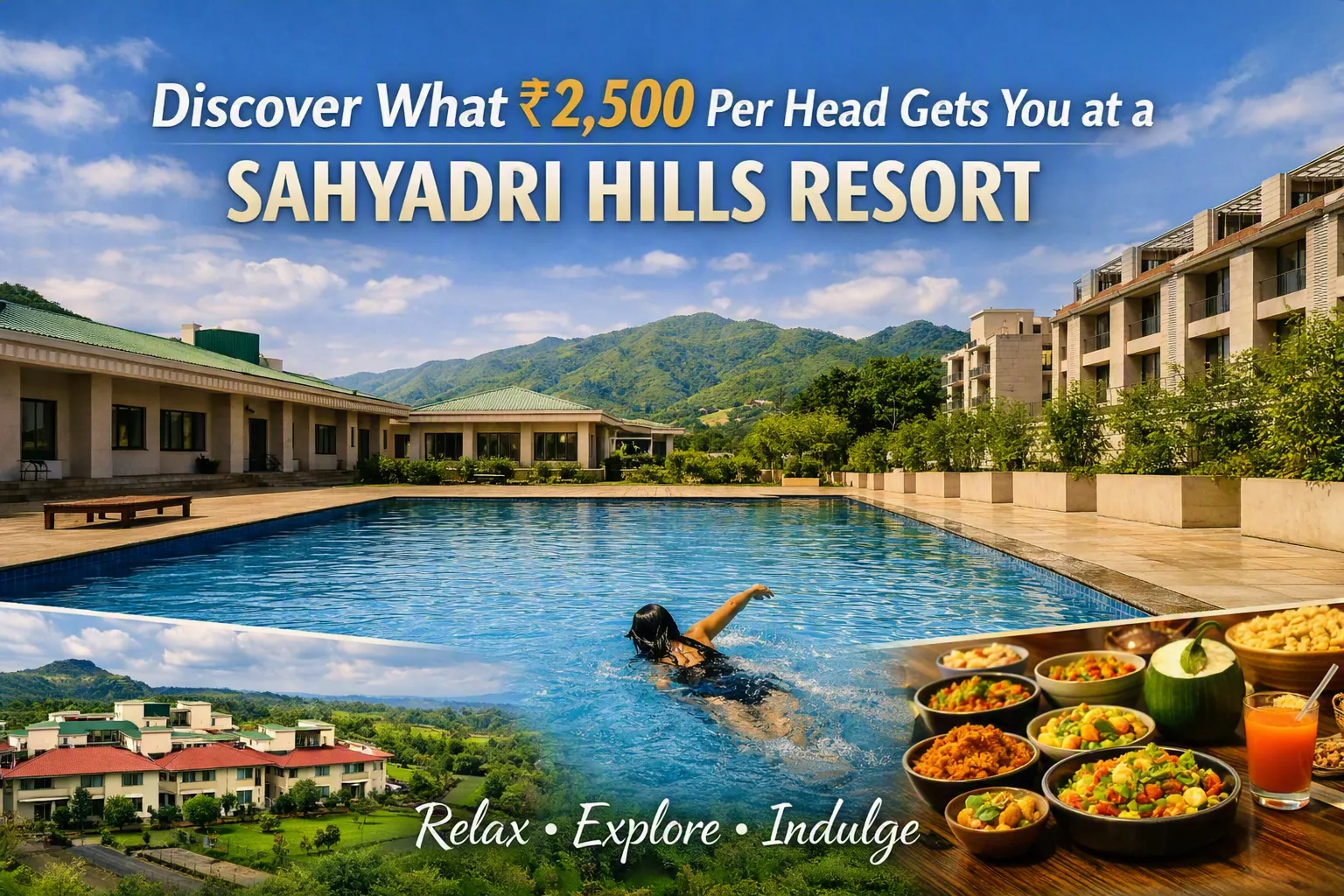
However the drive goes, arriving at Vivaant Retreat & Conventions after several hours on the road tends to reset the pace of the whole weekend. Check-in is quick, and guests staying in the Sahyadri Suite or Valley Deluxe rooms often mention that the first look at the valley from their room's sit-out is the moment the drive stops feeling like transit and starts feeling like the holiday itself. A meal at the resort's own dining space rounds out the evening for most arrivals, particularly for anyone who skipped a proper stop along the way and is ready for something substantial rather than another roadside snack.
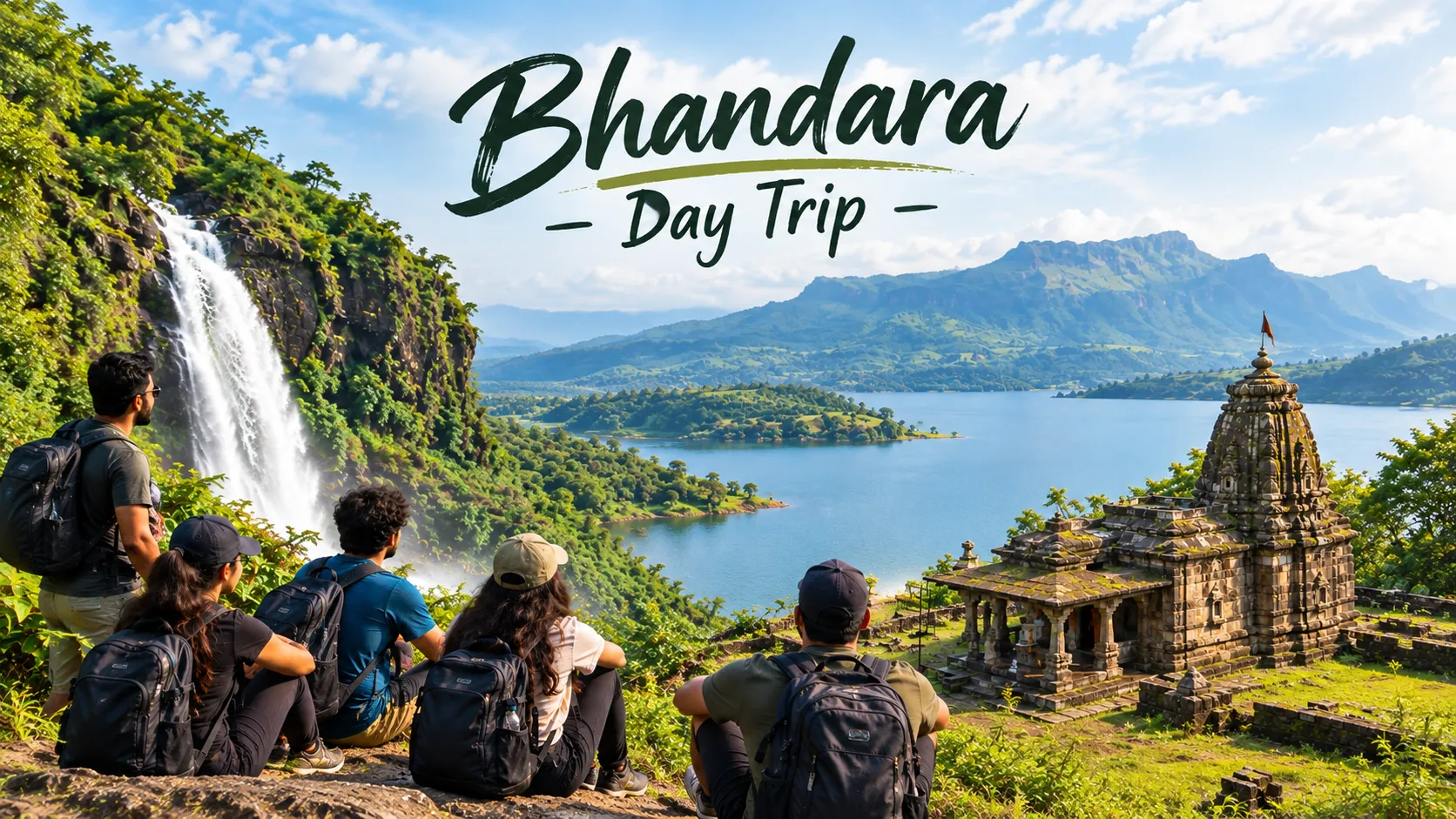
Guests who've made the drive more than once tend to develop preferences — a favourite stop in Narayangaon, a habit of checking traffic before choosing between NH60 and the expressway route, an instinct for which weekends to avoid entirely. First-timers can shortcut most of that learning curve simply by leaving early, picking the direct NH60 route outside of peak season, and building in one deliberate stop along the way rather than pushing straight through. Guests planning to add a longer excursion once they've arrived can pair the drive with a full outing like the guide to Bhandardara day trips from Igatpuri, or keep things lighter with the shorter itineraries covered in the guide to things to do around Igatpuri.
Planning your own drive up from Pune? Book a stay at Vivaant Retreat & Conventions and let the resort be the reward at the end of the road.